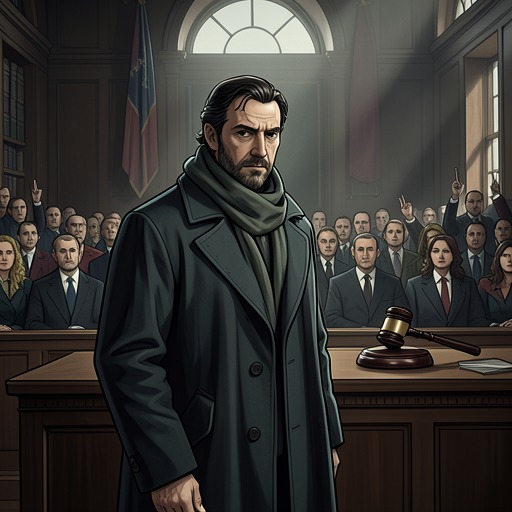
Social Determinism and Individual Agency
Native SonSocial Determinism and Individual Agency names a central tension in Native Son: Bigger Thomas acts, but he acts within a social world that has sharply constrained his choices and shaped his understanding of what is possible. Wright links Bigger’s conduct to racial segregation, economic exploitation, and political power without making those forces a substitute for the harms Bigger causes. The novel’s form keeps both sides in view: social conditions press upon an individual consciousness, while decisions made under that pressure still alter other people’s lives and carry consequences.
Intellectual Framework
Wright’s approach brings naturalism into contact with two traditions that pull in different directions. Naturalism emphasizes the force of a person’s environment; communism, as described in the account of Wright’s thought, locates identity and consciousness in economic, social, political, and historical conditions. Existentialism, by contrast, gives greater emphasis to the will’s role in creating identity. Wright’s artistic problem was to hold these competing emphases together in a novel: to make structural forces legible without reducing a human life to a formula, and to suggest agency without pretending that people choose from equal or unrestricted positions.
This synthesis informs the conception of Bigger itself. Wright recalled that the character drew on people he had encountered over the course of his life, including Black men whose antisocial conduct and hostility toward white power took different forms. He also came to understand Bigger as more than a single individual or a criminal in an isolated episode: the character condensed conditions already present in American society. Yet Wright did not confine the pattern to Black life. He recognized versions of Bigger among white people as well, shaped by alienation and the failures of modern society. That broader pattern does not erase the specifically racial restrictions governing Bigger’s experience; it places them within a larger inquiry into how social arrangements can deform human lives.
Fear, Choice, and Conduct
The opening movement from Bigger’s conflict with Gus to his approaching job at the Dalton home shows how social pressure enters his decisions before he can clearly name it. Bigger is relieved to have an opportunity to leave the gang, but he also recognizes, obscurely, that fear of confronting a white man with a gun has helped precipitate his fight with Gus and derail the planned robbery. He settles on the simpler explanation that Gus was late. The discrepancy between the force influencing his action and the explanation he accepts exposes a divided consciousness: he acts in response to fear, then keeps that fear from becoming a fully acknowledged account of his choice.
His decision to carry his gun and knife to the Dalton home makes the conflict more concrete. He expects to enter a white neighborhood and takes the weapons partly because they make him feel safer and more equal. He tells himself that the route itself presents a possible danger, though he has heard of no recent attacks there. The objects do not remove the racial boundary he anticipates crossing; they give him a limited sense of control within it. This is agency in a constrained form, but it is not freedom from the consequences of his actions.
The novel also refuses to turn structural explanation into moral acquittal. In his relationship with Bessie, Bigger disregards her expressed refusals. The scene presents a violation of her agency, not simply an instance of his own thwarted freedom. Later, the public investigation brings Bessie’s death into the case, but Bigger’s understanding of racial injustice does not undo his responsibility for what he has done to her. Holding these facts together matters: a reading focused only on what has been done to Bigger would reproduce the very erasure of Bessie that the inquest exposes.
Social Structures Made Visible
The investigation of Mr. Dalton’s housing policies translates broad claims about inequality into specific material conditions. Asked about the rent charged to Black families, Mr. Dalton attributes prices to supply and demand. The questioning then contrasts his charitable donations for Black education with the eight dollars per week charged to the Thomas family for a single unventilated, rat-infested room shared by four people. Mr. Dalton also acknowledges that he refuses to rent houses to Black tenants in other parts of the city. These details show how a language of impersonal markets and benevolence can coexist with practices that confine families and extract money from them.
Max’s courtroom argument connects such conditions to the limits surrounding Bigger’s life. He describes restrictions on where Bigger can live, what schooling he can receive, where he can eat, and what work he can do. He points to the contrast between education that develops a child’s aspirations and a society that blocks their expression beyond the school door. His argument also names real-estate operators’ role in maintaining urban ghettos and links these limits to the dazzling consumer culture that advertises goods and happiness as if they were equally available to everyone. In this account, the crime cannot be understood apart from the environment that produced and constrained Bigger; Max’s case is that the court should examine that environment rather than treat punishment as a self-sufficient answer.
The newspaper coverage after the discovery of Mary Dalton’s remains shows how representation and state action reinforce one another. Reports identify Bigger as a suspect in a supposed sex crime and describe thousands of police surrounding the Black Belt, searches of Black homes, stops of vehicles leaving the South Side, and volunteers joining the hunt. The paper also reports smashed windows, beatings, arrests of Black men, job dismissals, and public fear directed at Black employees. Its claims about the case turn an accusation into a wider racial emergency. The manhunt thus makes the novel’s social determinism visible not only as background but as an escalating institutional response that bears on the lives of people who are not accused of Bigger’s crimes.
Responsibility, Race, and Unequal Recognition
At the inquest, the use of Bessie’s body as evidence forces Bigger to confront a distinction in how the two deaths are publicly valued. He recognizes that her killing is being presented in connection with the case against him, while the city’s attention and anger center on Mary’s death. He understands that the punishment sought will be driven by the killing of a white woman, and that Bessie risks being reduced to evidence rather than recognized as a person who was killed. His recognition is significant, but it does not make his earlier treatment of her less culpable. The scene places racial hierarchy and gendered vulnerability alongside his own responsibility, rather than allowing any one of those facts to cancel the others.
Bigger’s reaction also shows how a social order can continue to exercise power even after a person has acted against it. He feels that others have dictated where he lives and what he does, and that even the meaning assigned to his crimes and the terms of his death remain in their hands. This perception conveys the novel’s account of confinement: control operates through housing, work, public narratives, and legal proceedings, not only through direct commands. At the same time, the novel’s attention to Bessie prevents Bigger’s sense of being controlled from serving as the final measure of whose life and agency count.
Form and the Limits of Explanation
The three-part design of Native Son, Fear, Flight, and Fate, gives formal shape to the pressure between environmental force and personal action. Wright’s prose follows shifts in Bigger’s emotional and mental life, moving between surges of anger or desire and states of despair and powerlessness. The narrative brings readers close to a consciousness shaped by unstable conditions, rather than presenting Bigger only as an object in a criminal report. Its structure makes the social argument experiential: pressure is felt through the movement of thought as well as stated through courtroom testimony and public events.
Neither determinism nor agency resolves the novel into a simple judgment. Wright’s account treats racist institutions and restricted opportunities as forces that shape what Bigger can imagine and how he responds, but it also represents the violence he directs toward other people, including Bessie. The contrast between his constrained life and his consequential acts is the point of the tension, not a contradiction to be tidied away. By placing individual choices beside housing discrimination, racialized reporting, collective pursuit, and unequal recognition, Native Son asks readers to see personal conduct and social power together—and to distinguish explanation from exoneration.